Product presentation · Confirm configuration with your quotation
KES / Skin resurfacing
MED-870 Fractional CO2 Laser Manufacturer
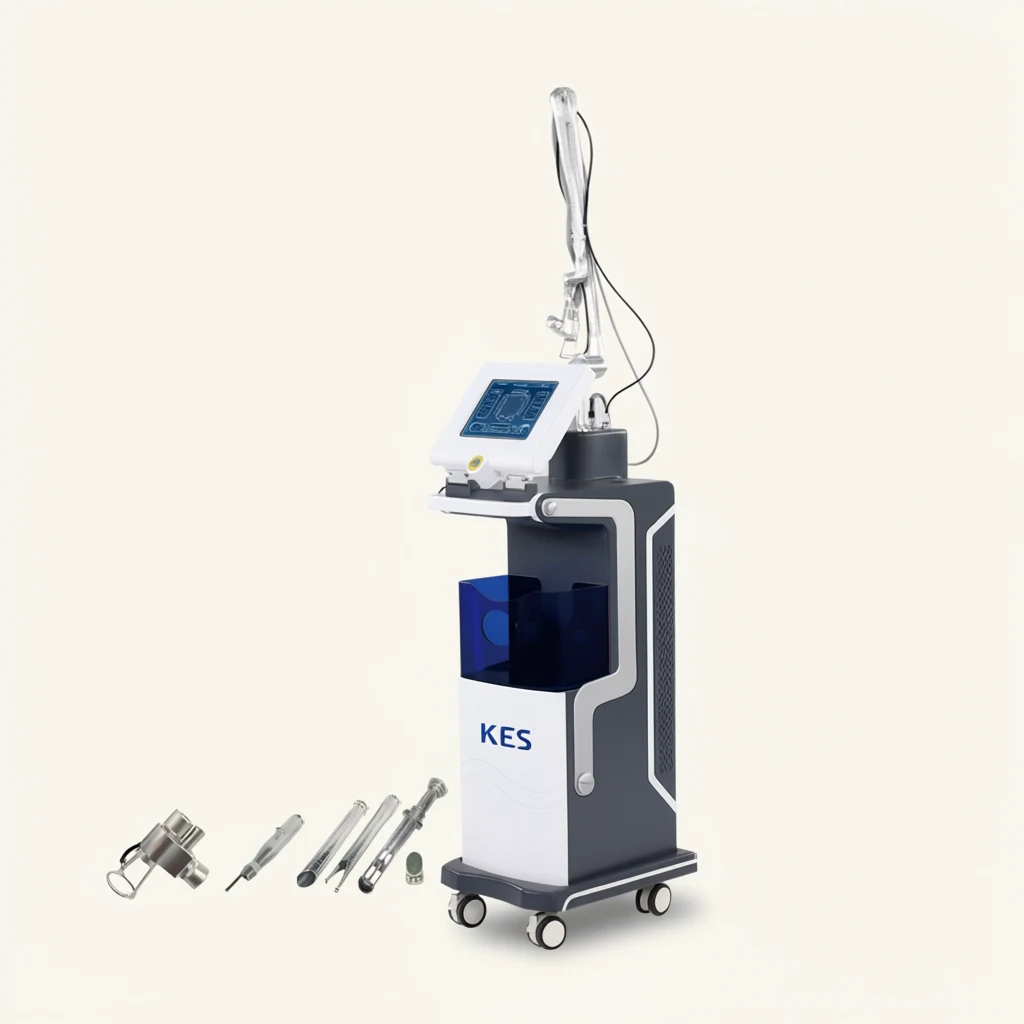
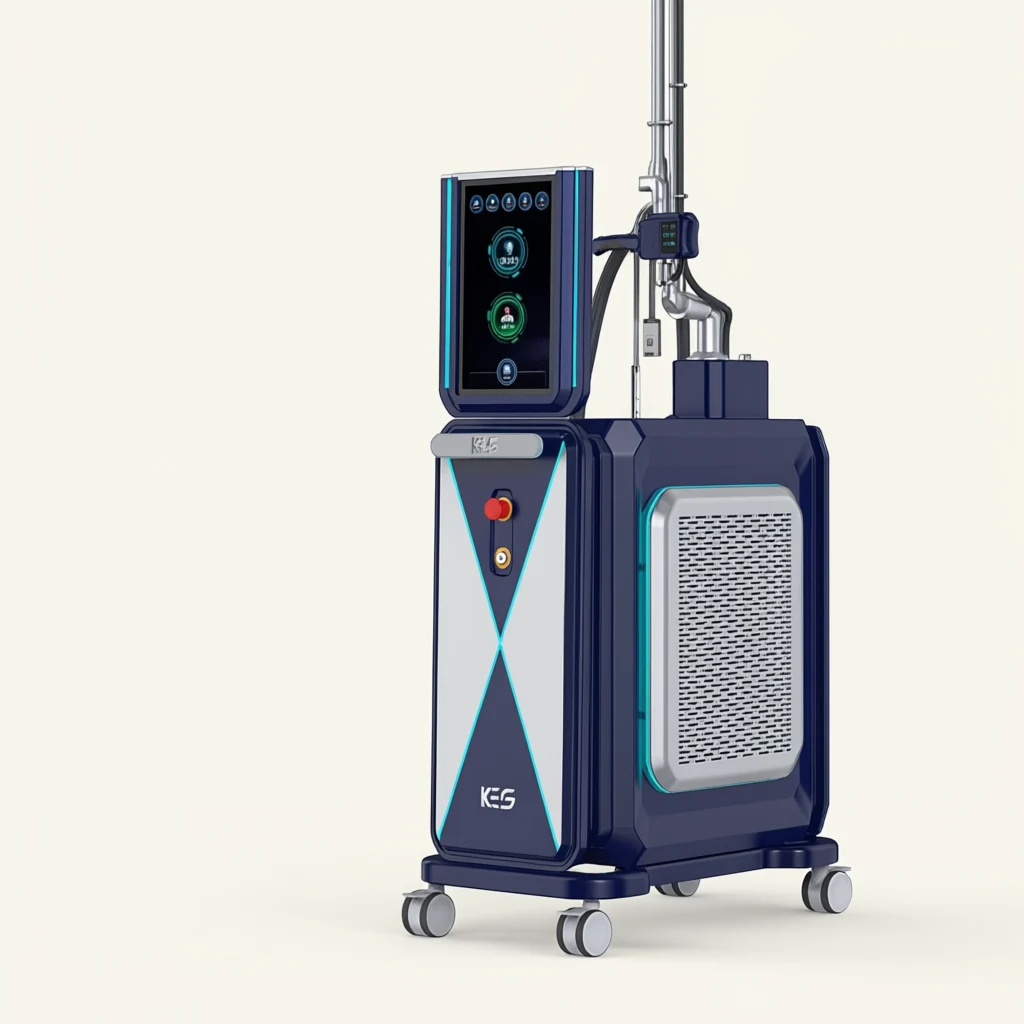
MED-870 is the KES fractional CO2 laser machine for professional equipment procurement. The published configuration includes a 10600nm wavelength, a 40W RF metal tube and an articulated delivery arm. Buyers can use this page to review the model's documented hardware and prepare a precise enquiry about the supplied package, installation requirements and supporting documents. Clinical use and parameter selection require the relevant professional review and operating instructions.
View specifications ↓For distributors and professional procurement.
Share your destination market when you enquire.
Share your destination market when you enquire.
Technical specifications
| Operating System | 15.6’ Android Screen |
|---|---|
| Model No. | MED-870 |
| Laser Power | U.S. 40W RF Metal Tube |
| Wavelength | 10600nm |
| Spot Size | 0.12mm |
| Spot Density | Up to 102,400 Dots |
| Scan Size | Up to 20*20mm |
| Scan Shape | Square; Rectangle; Circle; Triangle; Rhombus; Ellipse; Line |
| Scan Mode | Standard; Random; Scatter |
| Aiming Beam | 5mw red diode laser, 635nm, adjustable intensity, blink on/off |
| Beam Delivery | 360°Rotation Articulated 7 Joint Arm |
| Cooling System | Compressor Refrigeration+Air Cooling |
| Voltage | 220V±10% 50/60Hz, 110V±10% 50/60Hz |
| Net Weight | 86KG |
Options and order-specific details should be confirmed in the final quotation.
A fractional CO2 system to evaluate by configuration
The MED-870 product specification provides a useful starting point for a technical shortlist. It identifies a U.S. 40W RF metal tube, a 10600nm wavelength and a 15.6-inch Android screen. These are model-specific details. Keep the MED-870 name attached to requests for current photographs, manuals and quotations so information from another CO2 product does not enter the purchasing record unnoticed.
Start your enquiry with the intended procurement context. A distributor may need a demonstration package and consistent documentation for future orders. A clinic purchasing team may need to coordinate the room, equipment responsibilities and local requirements before selecting a configuration. State those needs clearly and request the relevant supporting information rather than relying on a general description of a fractional laser.
The product is presented with an AI-system name, but that name alone should not define your software expectations. Ask which functions are available on the quoted version, what information the interface displays and what documentation explains the controls. Do not infer autonomous clinical decisions, remote management or particular software services from the product name. Put any required feature into the enquiry as a question.
Examine the scan specification without confusing its measurements
The published spot size is 0.12mm, while scan size is listed as up to 20 × 20mm. These are separate entries and should remain separate in your comparison. The source also lists spot density as up to 102,400 dots. Request an explanation of the display labels, available combinations and measurement conditions if your technical team needs to assess how those entries relate to the proposed configuration.
Available scan shapes are listed as square, rectangle, circle, triangle, rhombus, ellipse and line. Scan modes are standard, random and scatter. For an equipment evaluation, ask for a control demonstration that clearly identifies the mode and shape being shown. A demonstration should help your team recognise the interface; it should not become a substitute for the instructions or professional training required for operation.
If a purchasing specification calls for a particular scan function, describe that requirement precisely and ask for written confirmation. Avoid assuming that every listed maximum applies simultaneously with every other setting. A clear technical response should distinguish the available controls from the conditions under which they can be selected. Keep that response with the configuration schedule used to approve the order.
Review the articulated arm and aiming controls
Beam delivery is published as a 360-degree rotation articulated seven-joint arm. Include arm positioning, storage and handling in your equipment review. Ask for current photographs showing the arm supplied with the quotation and request the instructions that explain its permitted movement and care. Those details help your receiving team prepare without inventing a working clearance from a catalogue image.
The aiming-beam entry identifies a 5mW red diode laser at 635nm, with adjustable intensity and blink on/off. Treat that entry as an aiming-system specification, separate from the CO2 wavelength. Ask the supplier to demonstrate where the aiming controls appear and which checks are required before operation. The purchasing discussion should establish what documentation accompanies the system and who will review it locally.
When planning acceptance, record the arm and accessory identifiers alongside the cabinet model. Ask which items are fitted before shipment and which steps, if any, are completed at the destination. If your organisation uses a technical acceptance checklist, include visible condition, item count and the agreed demonstration record. This keeps an inspection focused on the delivered equipment rather than unsupported expectations.
Coordinate electrical supply, cooling and room preparation
Published voltage options are 220V ±10% at 50/60Hz and 110V ±10% at 50/60Hz. Confirm which version will be supplied for your premises and request the full electrical installation requirements. A voltage listing does not answer every question about the connection, circuit or local installation. Have the relevant person at your site review the requirements before the equipment arrives.
The cooling system is described as compressor refrigeration plus air cooling. Ask for the environmental conditions, clearance requirements and care instructions applicable to the exact configuration. Do not turn the cooling description into an assumption about unrestricted operating time or performance in every room. Your enquiry can include the planned location and schedule so the technical discussion addresses the actual installation.
Net weight is published as 86kg. Use that figure to start a receiving and positioning discussion, then request the packed dimensions, gross weight and handling information for the shipment. Ask whether any parts travel separately and how they should be checked on arrival. The published net weight should not be substituted for the freight details required by your carrier or receiving contractor.
Make a CO2 laser comparison useful to every stakeholder
A useful comparison sheet separates source type, wavelength, scan controls, beam delivery, interface, electrical requirements and cooling. Add the supplied accessories and the documents needed for your market. This lets a purchasing team see whether two offers describe comparable packages before it compares price. It also makes unanswered technical questions visible rather than hiding them inside broad marketing terms.
The KES skin-resurfacing category offers a place to organise related enquiries. When considering another model, request its own current specification and configuration list. Do not transfer MED-870 figures to a different unit because the equipment shares a technology category or a similar model number. Your commercial record should always connect each price to one clearly identified equipment configuration.
Ask your clinical, technical and purchasing colleagues to review the parts relevant to their roles. A technical feature may be documented without establishing suitability for your intended local use. A complete purchasing decision therefore needs the appropriate documentation and professional assessment as well as a hardware comparison. Keep approval responsibilities explicit so a commercial quotation is not mistaken for technical or clinical sign-off.
Define the distributor or branding project in writing
For a distributor enquiry, explain the destination market, purchasing quantity and whether the first unit is intended for evaluation or resale. Ask which product information can be supplied for your local review and which details must be confirmed before ordering. Avoid promising customers a particular configuration until the proposed package has been identified and the relevant documents have been reviewed.
If you want to discuss branding, list your requirements for product presentation, packaging language and supporting materials. Ask which changes can be considered and what review process, order conditions and timing would apply. These are requests for an OEM/ODM discussion, not statements that every visual or software change is available. Keep branding requests separate from unapproved technical changes.
For a recurring supply project, ask how model identification and configuration revisions will be communicated. Request a consistent reference for approved artwork, accessory schedules and product descriptions. That record helps your team keep quotations, purchasing documents and customer information aligned. It also gives future enquiries a precise starting point when you need to discuss an additional unit or a replacement component.
Agree on inspection, handover and support scope
Before dispatch, agree on the evidence your team needs to confirm model identity, supplied accessories and visible condition. Ask for the current documentation set and a record of the agreed checks. Define who will review those materials and how unresolved points will be addressed. This is easier to manage before shipment than after a receiving team discovers that different people expected different packages.
Request the instructions for receipt, installation and handover that apply to your order. Ask what training or technical support arrangements can be discussed, who provides them and what is included in the quotation. Do not assume a response time, onsite visit or service period from a general catalogue statement. Commercial support terms need to be connected to the actual transaction.
For longer-term planning, ask how spare parts are identified, what information is required for fault reporting and how maintenance documentation is obtained. Keep component descriptions separate from warranty terms. A stated characteristic of a laser source does not establish coverage for the complete machine. Your final MED-870 purchasing file should contain the equipment schedule, documentation requirements and agreed commercial responsibilities.
Before you enquire
Questions, answered.
What are the core published MED-870 specifications?
The model is listed with a 10600nm wavelength, a U.S. 40W RF metal tube, a 15.6-inch Android screen and an articulated seven-joint delivery arm. Its specification also describes scan controls, aiming beam, cooling and voltage options. Ask for a current configuration schedule identifying what is included in the quotation and which supporting documents accompany that exact package.
Are spot size and scan size interchangeable?
No. The published specification lists a 0.12mm spot size and a scan size of up to 20 × 20mm as different entries. Keep them in separate comparison fields. If your technical team needs further detail, request the measurement definitions and operating conditions from the supplier. These equipment figures are not operating recommendations and should not be used to predict a clinical result.
What should I confirm about the Android interface?
Ask for a demonstration of the supplied software version, the available controls and the documentation explaining them. Identify any language or workflow requirements your team has. The published screen and system description does not by itself establish remote services, automatic clinical decision-making or a specific update policy. Request those details individually if they are relevant to your purchasing decision.
What delivery information is still needed beyond the net weight?
The published net weight is 86kg. For logistics, request gross shipment weight, package dimensions, handling instructions and the agreed delivery basis. Check access to the final equipment location and ask whether the arm or accessories require separate receipt checks. Give your carrier and receiving team the confirmed shipment information rather than relying only on the equipment specification.
How can I request a quotation for this CO2 laser?
Send the model name MED-870, your destination, purchasing role and the configuration questions you need answered. Include documentation, electrical and accessory requirements where known. Use the contact or OEM/ODM enquiry page to explain any branding discussion. Ask for an itemised proposal so equipment, optional items, shipment terms and support arrangements can be reviewed separately.
Keep exploring
Explore category →In the same collection.
Your next equipment project
Let’s build your shortlist.
Tell us your market, preferred model and configuration questions.