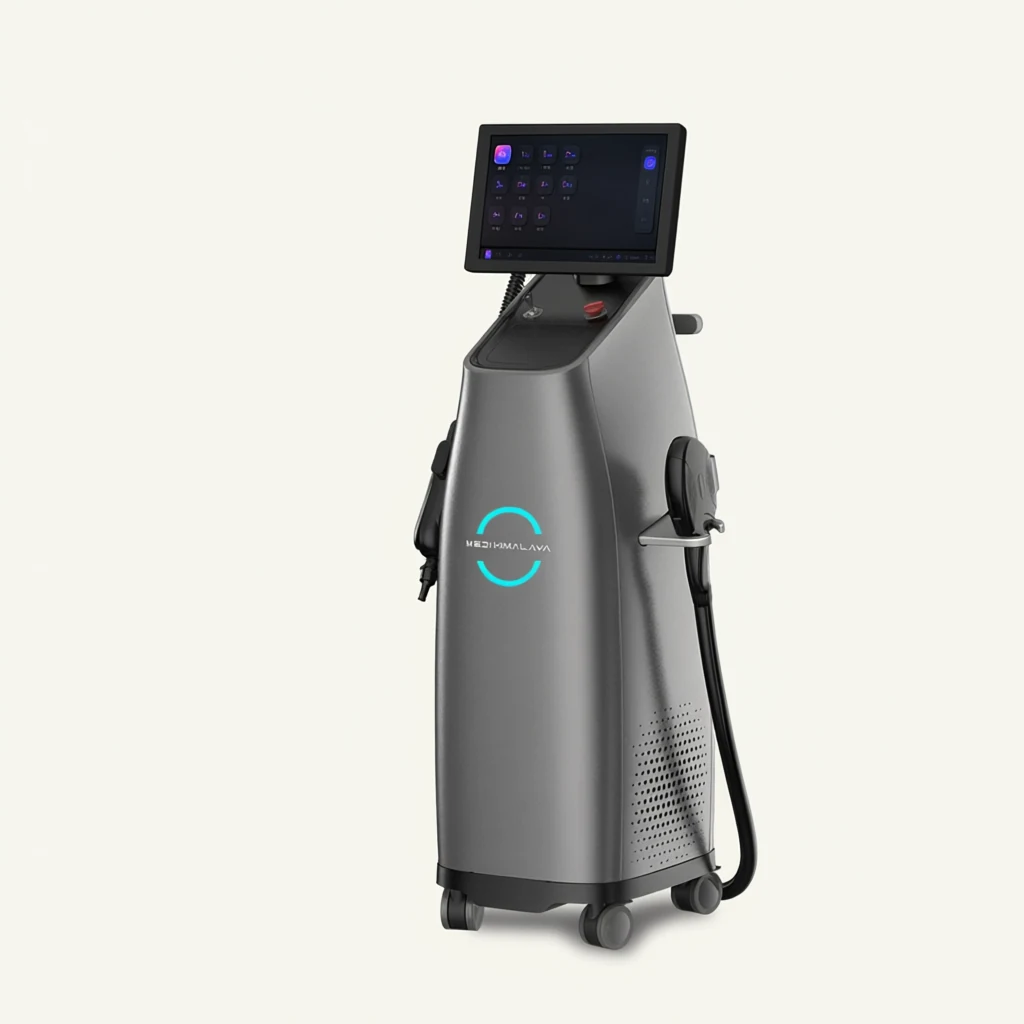
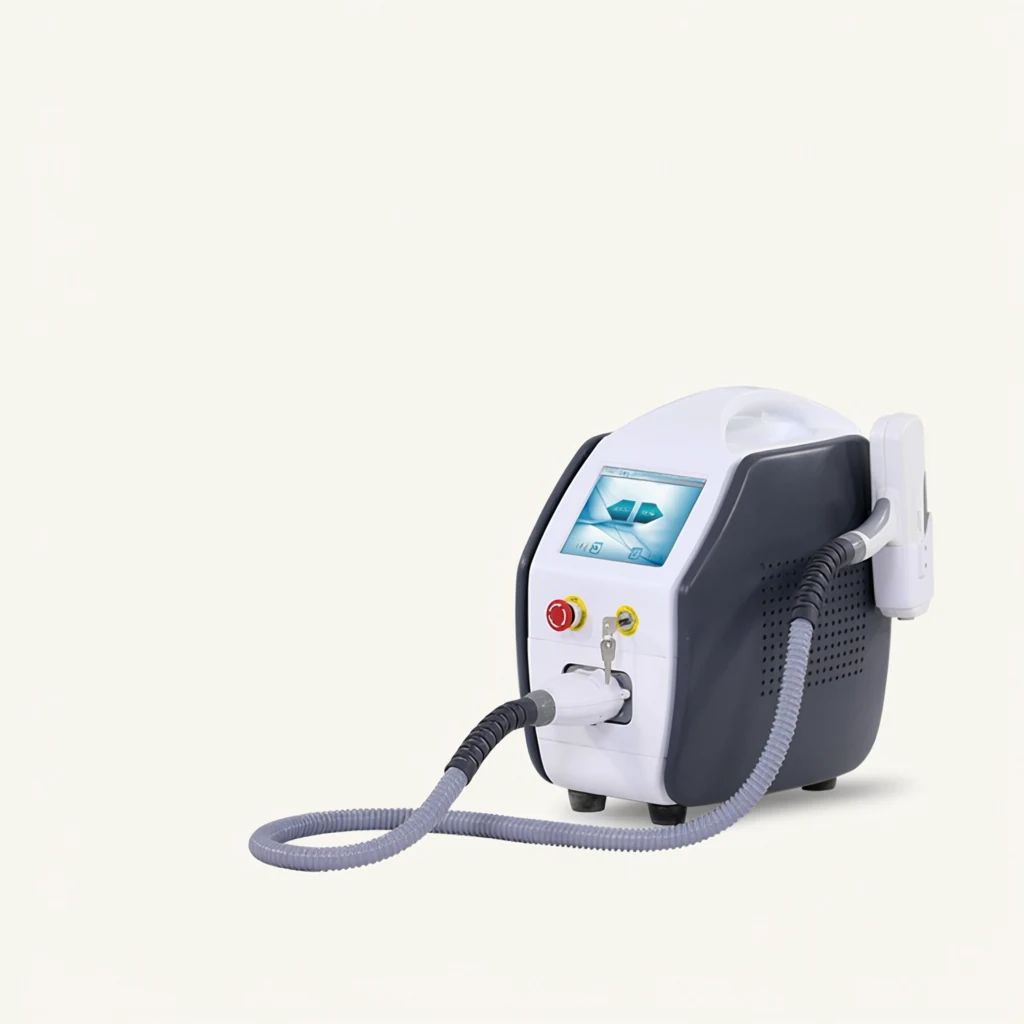
Product presentation · Confirm configuration with your quotation
KES / Tattoo removal
MED-AL1 Nd:YAG Equipment Manufacturer
Plan a MED-AL1 purchase with a clear separation between the standard treatment-head list and optional additions. Use the published dimensions, weight and electrical details to prepare your review, then request a quotation for the exact package.
View specifications ↓For distributors and professional procurement.
Share your destination market when you enquire.
Share your destination market when you enquire.
Technical specifications
| Type of Laser | 1064nm 532nm Laser Tattoo Removal Machine |
|---|---|
| Treatment Heads | 1064nm, 532nm, 1320nm (1064nm Fractional & 755nm optional) |
| Power | 500W |
| Energy | 10-1000mj; Max 1500mj/ 2000mj (Optional) |
| Frequency | 1-10HZ |
| Screen | 8.4” True Color Touch Screen |
| Voltage | 220V 50/60HZ or 110V 50/60HZ |
| Dimension | 38*32*48cm (W*D*H) |
| Weight | 25KG |
Options and order-specific details should be confirmed in the final quotation.
Define the MED-AL1 package you want priced
MED-AL1 is the equipment identifier for this enquiry. Its published laser-type entry identifies a 1064 nm and 532 nm laser tattoo-removal machine. When opening a sourcing discussion, state the full model name and explain whether you need an individual unit, a demonstration package or a distributor quotation. Include the destination and the quantity you would like priced. Ask for a dated specification sheet associated with that particular offer.
Start your internal purchasing record with a list of requirements rather than a list of assumed capabilities. Which treatment heads do you want included? What documentation language is needed? Who will review the electrical and installation requirements? Which service questions must be answered before approval? Addressing those questions in the initial enquiry gives the supplier a defined brief. It also helps your team distinguish the published specification from the commercial package that is still being negotiated. The final equipment and accessory scope should be agreed in writing.
Separate the listed heads from optional choices
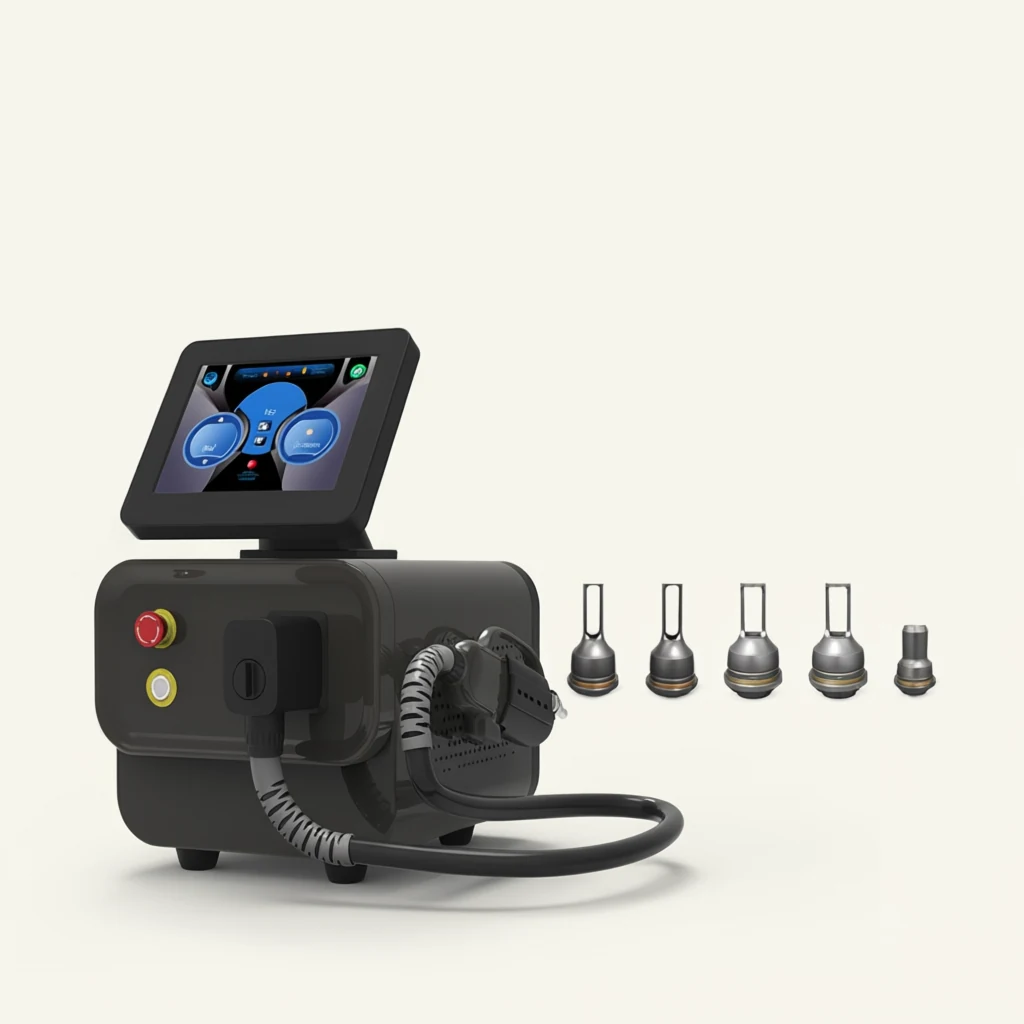
The MED-AL1 treatment-head entry lists 1064 nm, 532 nm and 1320 nm. It identifies 1064 nm Fractional and 755 nm as optional. That distinction is important when preparing a request for pricing. List the standard package you want reviewed, then put any desired optional heads on separate lines. Ask for an individual identifier and photograph for each proposed head so that your technical reviewer can assess the actual items under discussion.
If you are comparing two offers, check whether their accessory lists cover the same requested package. An offer containing optional additions should be reviewed against those additions, rather than treated as identical to an offer for the standard list. Ask which documents accompany each head and how the parts will be recorded on the packing list. Avoid assuming that a photograph showing several accessories guarantees that every one is included. The treatment-head names are equipment descriptors, not a basis for promising a particular result or recommending a treatment to an individual.
Clarify the energy option before accepting a specification
The published energy entry is 10–1000 mJ, with maximum 1500 mJ or 2000 mJ identified as optional. Keep the optional status visible in any purchasing summary. If one of those options is part of your requirement, ask the quotation to identify the proposed version and the supporting specification. Do not advertise an optional maximum as though it belongs to every MED-AL1 package.
The power field is 500 W, and frequency is listed as 1–10 Hz. Ask for the technical documentation that explains the relevant conditions and the settings available on the offered configuration. For your internal review, retain separate lines for power, energy and frequency. If a supplier response changes one entry or introduces a new range, request a revised dated specification rather than relying on a verbal clarification. This is also a useful point to check that your purchasing team and any distributor catalogue use the same figures. None of these entries establishes a guarantee about clinical outcomes, treatment duration or the volume of work your business can perform.
Use dimensions and weight for your initial logistics questions
The published dimensions are 38 × 32 × 48 cm, in width, depth and height order. Weight is listed as 25 kg. You can use these entries to begin your logistics discussion, but request packed dimensions and gross shipping weight for the actual order before making a freight booking. Ask whether any separately packed accessories or additional items are part of the shipment. Keep the machine dimensions distinct from the shipping-package measurements.
For a planned receiving location, explain any access or handling constraints that the supplier should consider. Ask for the recommended receiving, unpacking and positioning instructions for the supplied equipment. Your facilities reviewer can then decide what arrangements are needed at the destination. If the order includes several units or optional heads, request a packing plan that identifies the contents of each package. Do not infer a suitable transport method or a complete installation arrangement from the dimensions on this page. The purpose of an early logistics review is to turn those details into questions that can be answered before dispatch.
Review the display and electrical information together
MED-AL1 lists an 8.4-inch true-color touch screen. The voltage entry is 220 V at 50/60 Hz or 110 V at 50/60 Hz. In your enquiry, identify the required electrical version and ask the supplier to confirm the corresponding rating information. Request the applicable plug and setup details as part of the same discussion. Do not assume that two voltage alternatives describe an automatically switching unit.
Ask for photographs or an agreed demonstration of the interface supplied with the quoted configuration. Your reviewer may want to check the language, model identification and relationship between the displayed information and the supplied instructions. If you need a different language or a particular documentation format, describe it as a request and obtain a written response. The published screen size does not establish available software languages or customization options. Keep any approved interface or document requirement attached to the exact equipment version, so that the receiving team can check it against the order rather than against a generic catalogue image.
Compare offers by configuration and completeness
Build your MED-AL1 comparison around a consistent set of fields: model identity, standard treatment heads, requested optional heads, energy version, electrical version, dimensions and weight. Follow those with the information you still require, such as the contents of the delivery package, documentation language and the proposed service arrangements. A blank field should remain a question until it receives a model-specific answer.
When reviewing the wider tattoo-removal category, maintain separate records for the other equipment on your shortlist. Do not transfer a specification simply because a product uses similar terminology. Ask each offer to identify its own configuration and optional items. Your team can also compare how clearly the supplier has answered the brief: are accessories individually named, are optional prices separate, and are the technical documents associated with the actual model? Those checks can support a purchasing decision without claiming that one machine is universally superior. If your choice depends on a detail not established here, flag it explicitly in the enquiry before treating the shortlist as complete.
Describe branding and distribution needs without assumptions
For a proposed branded package, send a separate MED-AL1 customization brief. State the artwork, placement, packaging and documentation changes you would like considered. Ask which requests can be accommodated, which require further technical review and what commercial conditions apply. Request an approval stage for any proposed artwork before it is regarded as part of the order. Availability is established by the response to your brief, not by the existence of a general OEM/ODM enquiry route.
If you plan to distribute the equipment, explain the destination market and the product information you require for your own review. Ask which images and technical descriptions can be used for the agreed package. Keep the optional energy versions and optional heads visible in your draft listing. Avoid presenting an unapproved configuration as a stocked product or implying a market authorization that has not been verified for the exact equipment. You may also ask how future accessory or spare-part requests should identify the machine. Treat any forecasted purchases as a separate planning discussion unless they are expressly part of the current offer.
Close the open questions before placing the order
Request an itemized offer with the full model name, quantity, electrical version and accessory list. Ask for separate pricing of the optional heads or energy version you are considering. The offer should also address your requested destination, quotation validity and proposed delivery arrangements. If your purchasing process requires particular supporting documents, list them in the enquiry and ask what can be provided for review.
Discuss after-sales requirements with equal specificity. Ask about the contact route for technical questions, the information needed to identify a supplied unit, the proposed spare-part process and the applicable written warranty terms. If you want training or an equipment demonstration, request its scope, format and conditions. Once the technical and commercial discussions are complete, keep the agreed configuration with the order record. The receiving checklist should refer to that record. To begin the conversation, send the MED-AL1 model name and your proposed standard-plus-optional package, then highlight the questions your team needs resolved before approval.
Before you enquire
Questions, answered.
Which MED-AL1 heads are identified as optional?
The treatment-head entry lists 1064 nm, 532 nm and 1320 nm, with 1064 nm Fractional and 755 nm identified as optional. Ask for the included and optional items to appear separately on the quotation. Confirm the identifiers and quantities of the heads you intend to purchase rather than relying on a promotional photograph alone.
Is 2000 mJ included in every version?
The published energy entry is 10–1000 mJ, with maximum 1500 mJ or 2000 mJ marked optional. Request a version-specific quote if an optional energy configuration is part of your brief. Keep that distinction in your purchasing record and any later product description. The optional figure should not be represented as standard across every offer.
What size and weight are published?
The machine dimensions are listed as 38 × 32 × 48 cm in width, depth and height order, and weight as 25 kg. Ask separately for the packed dimensions, gross weight and package count of the proposed shipment. The published machine measurements do not describe a complete freight booking or the dimensions of additional accessories.
Which electrical requirements should I request?
The source lists 220 V at 50/60 Hz or 110 V at 50/60 Hz. State your required version and ask for confirmation on the offer, together with the applicable rating information and setup documents. Do not assume automatic voltage switching. Have your destination requirements reviewed against the documentation supplied for the specific unit.
How can I request an itemized manufacturer quotation?
Use the contact page and include MED-AL1, your quantity, destination, electrical requirement and desired heads. Identify any optional energy version you want reviewed. Add documentation, demonstration and service questions, and ask for written commercial terms. This produces a defined request that can be checked against the proposed package before you make a purchasing commitment.
Keep exploring
Explore category →In the same collection.
Your next equipment project
Let’s build your shortlist.
Tell us your market, preferred model and configuration questions.