Product presentation · Confirm configuration with your quotation
KES / Tattoo removal
MED-810A Q-Switched Laser Manufacturer
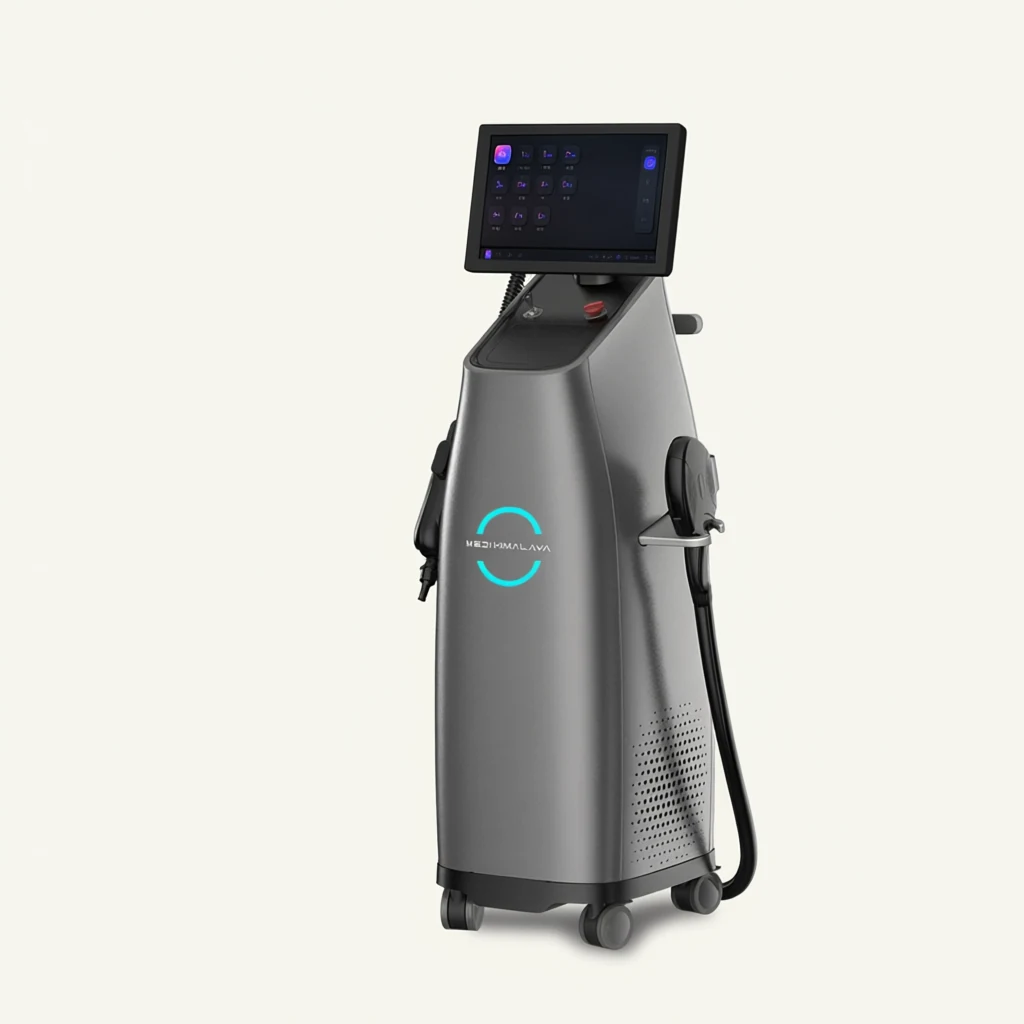
Review MED-810A as a distinct Q-switched KTP Nd:YAG equipment purchase. Its published specification includes three wavelength entries, an optional maximum-energy configuration and defined dimensions. Build your quotation around the version and accessories you want supplied.
View specifications ↓For distributors and professional procurement.
Share your destination market when you enquire.
Share your destination market when you enquire.
Technical specifications
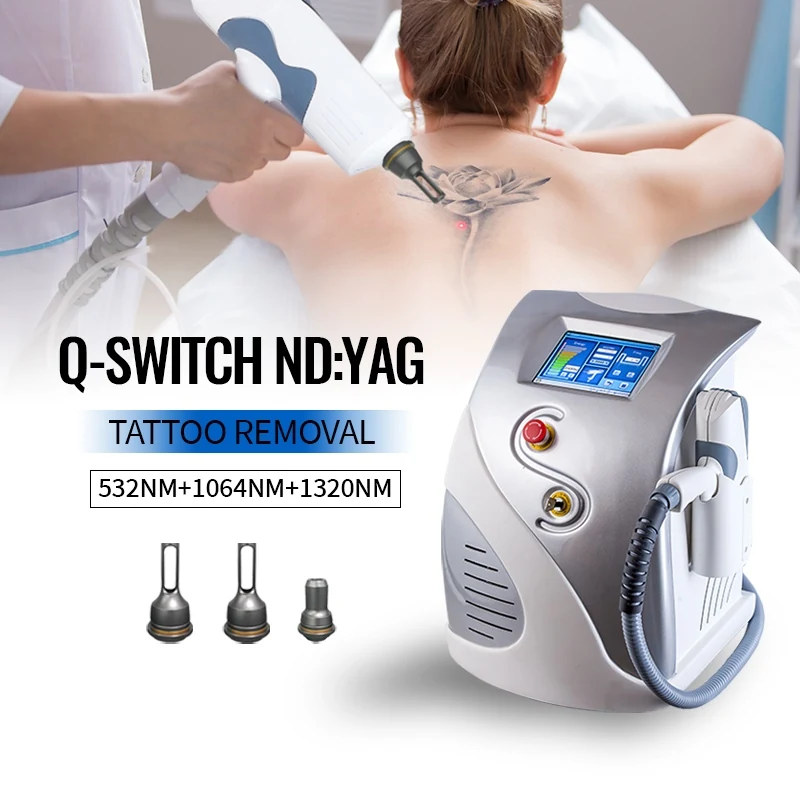
| Wavelength | 1064nm & 532nm&1320nm |
|---|---|
| Energy | 100-1600mJ,Max :2000mJ (Optional) |
| Laser Type | Q-switched KTP Nd:YAG |
| Spot Size | 2-8mm |
| Repetition Rate | 1-10Hz |
| Power | 500W |
| Stand-by Working | Continuously for 18 hours |
| Cooling | Self-contained, closed water cycle |
| Display | 8.4” True Color LCD Touch Screen |
| Electrical Requirements | 100-240VAC, 20A max., 50/60Hz |
| Net Weight | 25kgs |
| Dimensions (WxDxH) | 45*40*57cm |
Options and order-specific details should be confirmed in the final quotation.
A defined starting point for your MED-810A enquiry
The published laser type for MED-810A is Q-switched KTP Nd:YAG. Use the complete MED-810A identifier in your enquiry and ask for a current specification associated with the proposed offer. Keep the identifier on the accessory list and delivery documents as well. If you are researching several pieces of equipment, retain an independent purchasing record for each one rather than combining their specifications under a general product-family description.
Explain your proposed purchase in practical terms. State the destination, quantity and whether you want an individual machine, a demonstration package or a distributor quotation. Add the technical questions your reviewer needs answered and the documentation your business requires. You can then evaluate the supplier's response against a specific brief. This page provides published equipment information for that conversation. The final configuration, accessory contents and commercial terms still need a written offer and your own review before purchase.
Confirm the wavelengths and accessory arrangement
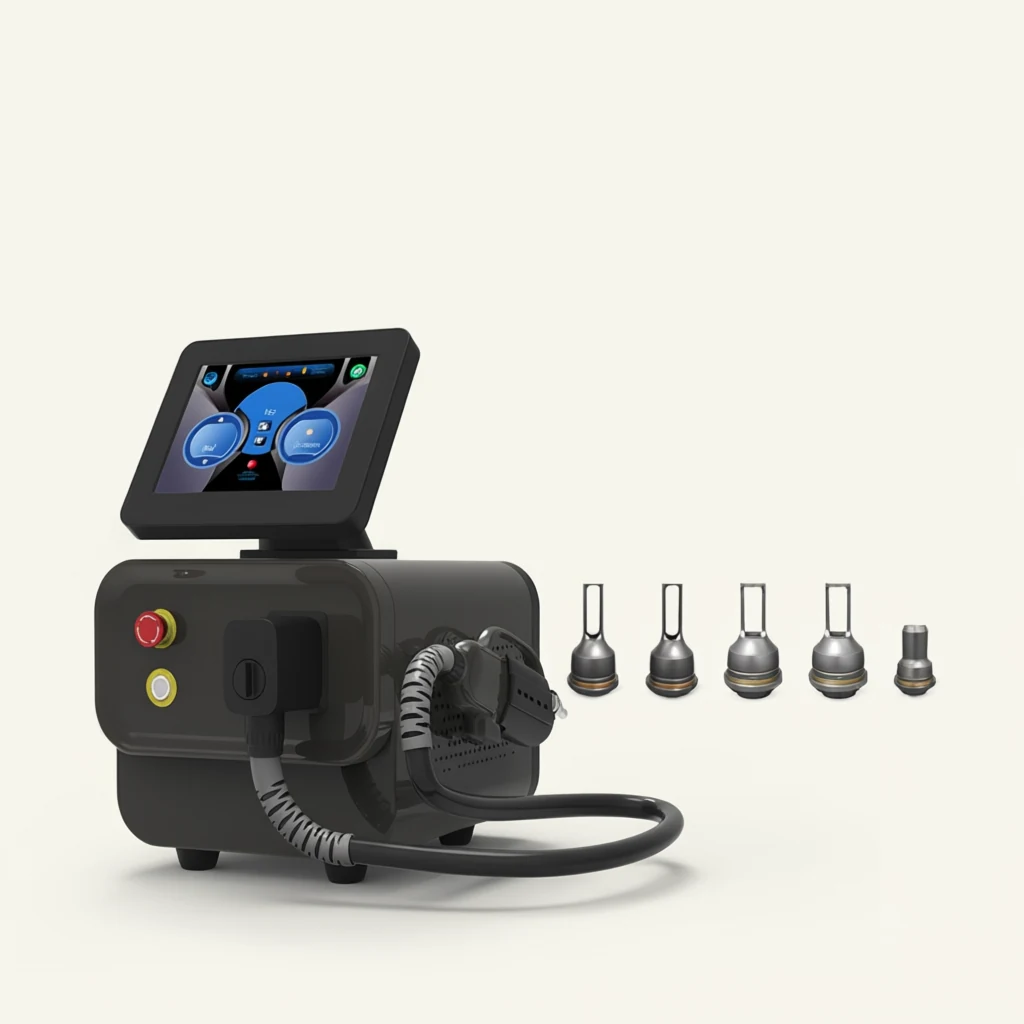
The MED-810A wavelength entry lists 1064 nm, 532 nm and 1320 nm. In your quotation request, ask how the proposed accessory package relates to those entries and which items are included. Request identifiers and photographs for the supplied heads or tips, along with the relevant documentation. Do not assume a complete delivered accessory inventory from the wavelength list alone.
If an accessory is particularly important to your evaluation, place it on its own enquiry line. Ask whether it is included in the base offer, supplied separately or requires further specification. You can also ask how it should be identified for a future replacement enquiry. Where you already own equipment, provide its full identifiers and photographs rather than assuming that a similar name or wavelength makes components interchangeable. Keep the answer attached to the MED-810A purchase record. The purpose of this review is to define the physical package and its documentation; it does not establish treatment suitability or authorize a particular operating procedure.
Preserve the optional energy status in your comparison
The published energy range is 100–1600 mJ, with a maximum of 2000 mJ identified as optional. If your purchasing brief depends on that option, ask for it to be separately identified in the quotation and supported by the applicable specification. A catalogue entry should preserve the distinction between the listed range and the optional maximum. Do not present the option as an included feature of every order.
The specification also lists a 2–8 mm spot size, a 1–10 Hz repetition rate and a 500 W power entry. Keep those fields separate in the technical review. Ask the supplier to explain the conditions and configuration to which the values apply, and request the relevant equipment documentation. A reviewer may need additional information before deciding whether a proposed configuration meets the organization's requirements. Leave those questions open until answered. Published ranges should not be turned into promises about treatment speed, outcomes or the amount of work that an operator can perform.
Plan receiving checks around the listed physical dimensions
Net weight is published as 25 kg, and dimensions are 45 × 40 × 57 cm in width, depth and height order. These figures are useful starting points for your receiving discussion. Ask separately for the shipping-package dimensions, gross weight and package count for the actual order. Additional accessories or several machines may need a packing arrangement that cannot be inferred from one equipment dimension entry.
Before arranging freight, request the packing details and the applicable receiving instructions. Your destination team can review access, handling and positioning requirements against the information supplied. If the location has constraints that affect delivery or setup, describe them in the enquiry and ask what further information the supplier needs. Keep the agreed accessory list with the receiving record so that the contents can be checked against the purchase. This page does not establish a freight method or installation procedure. Those arrangements should follow the actual order and the documentation for the equipment being delivered.
Review electrical supply, display and cooling requirements
The electrical entry is 100–240 VAC, 20 A maximum, at 50/60 Hz. Request the rating information and setup documents for the unit in the quotation, and have your requirements reviewed against those documents. Ask about the supplied connection arrangement and any preparation expected at the destination. Do not substitute a general assumption about similar equipment for the information associated with the actual unit.
The display is listed as an 8.4-inch true-color LCD touch screen. Cooling is described as self-contained, closed water cycle. Ask for the interface language and the instructions relevant to preparing, inspecting and maintaining the supplied cooling arrangement. Any fluid requirements, service intervals or site conditions should come from the applicable documentation, not from an inference based on the brief cooling description. If a demonstration is part of your evaluation, request a review of the quoted interface and accessories. Keep that demonstration focused on your technical questions rather than treating it as a guarantee of results in your business.
Ask how the standby entry is defined
The published Stand-by Working entry reads Continuously for 18 hours. Preserve the standby label if you include this information in your technical request. Ask the supplier to clarify its meaning, the conditions to which it applies and the relevant instructions for the quoted equipment. Do not turn a standby entry into a promise of uninterrupted treatment activity or use it to calculate appointment capacity.
Your organization may have its own planned operating schedule. Provide that schedule as a requirement for review and ask what documentation is needed to assess it. Include questions about inspection, preparation and any applicable limits, without proposing operating settings yourself. If a response changes your understanding of the specification, obtain a revised written record before using it in internal planning or customer-facing material. This keeps a short source-table entry from carrying more meaning than it establishes. A procurement decision should distinguish the published label, the supplier's clarification and the operating responsibilities that remain with the equipment user.
Compare the proposed package and request customization details
For a comparison within the tattoo-removal category, create separate columns for the MED-810A laser-type entry, wavelengths, energy version, spot size, repetition rate, electrical information and physical dimensions. Follow them with the proposed accessory contents and the documentation still needed. Keep the optional 2000 mJ maximum visible. Avoid filling any unanswered field with a specification taken from another similarly named product.
If branding is part of your sourcing brief, describe the proposed artwork, packaging and documentation changes in a separate request. Ask which items can be considered and what approval stages and commercial conditions would apply. For distribution, identify the destination and request the product information your market review requires. Ask which photographs and technical descriptions correspond to the proposed configuration before creating your own listing. Do not add unverified certification, clinical or service claims. Keep future order forecasts separate from the quantity currently being quoted, unless the written offer explicitly covers a wider purchasing arrangement.
Bring the technical review into the final offer
When your questions are organized, request a MED-810A quotation that identifies the machine, electrical configuration, accessory package and any desired option. Ask for separate pricing of additional items and a clear statement of quotation validity and proposed delivery arrangements. Include any documentation or demonstration requirement that your internal approval process depends on. Commercial conditions should be established for the actual order rather than inferred from this page.
For after-sales planning, ask how a supplied unit is identified in a technical enquiry, what information should accompany an issue report and how replacement components would be requested. Obtain the proposed warranty conditions in writing. If training or remote assistance is required, ask for the scope, format and any charges rather than assuming inclusion. Before accepting the order, make the agreed specification and package list available to your purchasing and receiving teams. You can begin through the contact page with the exact model, destination and quantity, followed by your optional-energy and accessory questions.
Before you enquire
Questions, answered.
What laser type and wavelengths are published?
MED-810A is listed as Q-switched KTP Nd:YAG, with 1064 nm, 532 nm and 1320 nm in the wavelength entry. Ask for the current technical sheet and the proposed accessory arrangement when requesting a quotation. Keep the model identifier attached to those details, and do not assume that similarly named equipment or existing accessories share the same specification.
Is the maximum 2000 mJ configuration standard?
No standard inclusion should be inferred. The source lists 100–1600 mJ and identifies a maximum of 2000 mJ as optional. If you want that option considered, ask for its availability, exact specification and pricing in the offer. Keep the optional status visible in purchasing notes and any subsequent catalogue description.
What are the published machine dimensions?
The dimensions are 45 × 40 × 57 cm in width, depth and height order, with net weight of 25 kg. Ask for packed dimensions, gross shipping weight and package count separately. Those delivery details depend on the proposed shipment and should not be replaced by the machine's own size and net-weight entries.
Does the 18-hour entry describe continuous treatment?
The source labels it Stand-by Working and states Continuously for 18 hours. This page does not reinterpret it as continuous treatment capacity. Ask for a model-specific explanation and the applicable conditions in the technical documentation. Your planned schedule should be submitted as a separate requirement for assessment rather than assumed from that entry.
What should I include in an OEM or distributor enquiry?
State MED-810A, the destination, quantity, electrical requirement and desired accessory package. Identify any optional energy configuration, then describe branding or documentation requests separately. Ask for an itemized quotation and written delivery, service and warranty conditions. Keep the proposed configuration clear enough that your technical reviewer and receiving team can assess the same package.
Keep exploring
Explore category →In the same collection.
Your next equipment project
Let’s build your shortlist.
Tell us your market, preferred model and configuration questions.